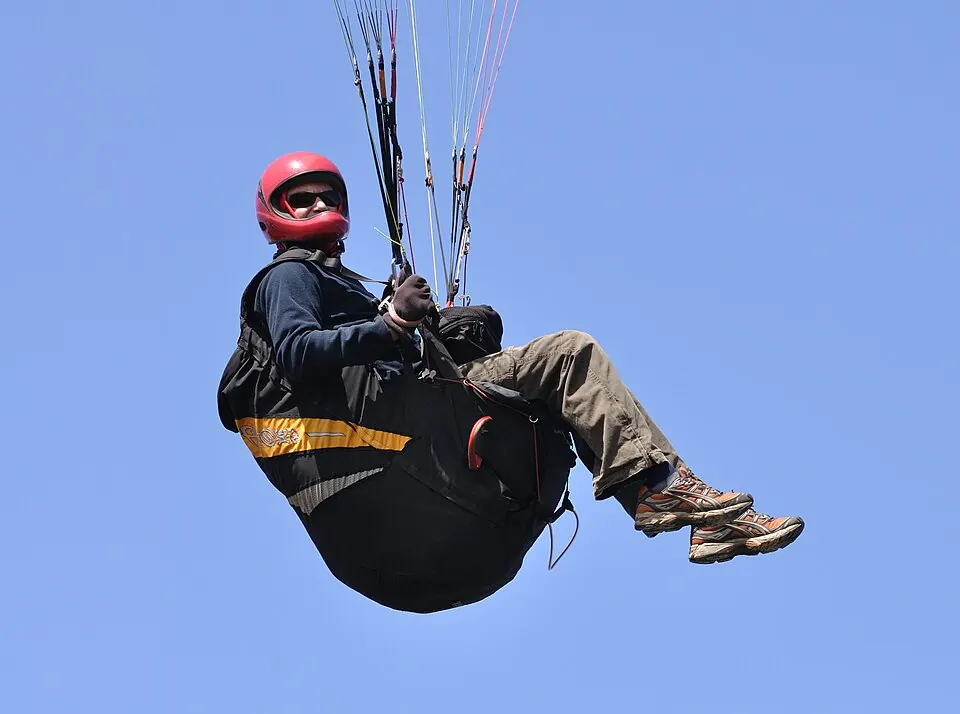
Who decides whether you fly
Paragliding depends on wind and thermals, not on the calendar. Listings say this in several ways: the take-off site “may change with the weather”, air time is “not guaranteed” and, if conditions are not right, the flight is rescheduled. The decision belongs to the pilot or operator, on the spot.
- A sunny day may not be flyable because of strong or cross winds.
- One operator recommends not booking right before you leave the island, so the flight can be rescheduled if needed. Good advice for any flight.
- If the pilot suggests another take-off, another time or cancelling, that is a normal part of the activity.
Cancellations and changes
Cancellation, change and refund terms are those of each booking on GetYourGuide and may change. We do not summarise them as a guarantee: read them on the listing before paying.
What the rules require from companies
In the Canary Islands, paragliding is listed in group C (“aerial activities”) of the active tourism regulation (Decree 226/2017, amended by Decree 138/2025, BOC no. 219, 4 November 2025). According to that text, a company offering it must:
- File a responsible declaration before starting and be entered in the General Tourism Register, which assigns a code in the format TA-… (arts. 5 and 8).
- Display that code via a QR code during the activity and in its advertising (arts. 8.3 and 8.4).
- Hold civil liability insurance of at least €600,000 per claim and €150,000 per victim, plus assistance or accident insurance covering search, rescue, transfer and medical assistance (art. 12).
- Use accredited staff: for aerial activities, the qualification or accreditation required by aviation law, plus first-aid training (art. 15).
- Inform you in writing about the activity, its risks, required fitness and minimum age, equipment, insurance, price including taxes and the consequences of cancelling (art. 9).
On the aviation side, Royal Decree 765/2022 excludes paragliders from the microlight category but applies operating limits to them, such as flying outside controlled airspace, urban areas and gatherings of people, as explained by Spain’s Aviation Safety Agency (AESA). We have not found a specific state licence for tandem paragliding pilots: tandem qualifications are issued by federations and training organisations, such as the Royal Spanish Aeronautical Federation.
What listings say about equipment and insurance
20 of the 32 listings we reviewed mention some insurance, but few specify which (civil liability, accident). Only two explicitly mention a reserve parachute, and several refer to “certified equipment” or a “certified pilot” without saying which certification. The comparison records what each one publishes.
How to check the operator
- Look for the operator’s active tourism code (TA-…) on the listing or their website, or ask for it.
- Ask what tandem pilot qualification your pilot holds.
- Ask whether the insurance covers passenger accidents, not just civil liability.
- Confirm the actual take-off site and what happens if flying is not possible that day.
- Be honest about your weight, age and health: the limits are there for safety.
Take-offs in the Teide area: the National Park management plan approved in December 2025 treats the take-off or landing of any aircraft inside the park as incompatible. Some listings still advertise take-off at Izaña or in the National Park, with an alternative site if that is not possible. Before booking, ask the operator where flights take off today. What the rules say.
FAQ
Is tandem paragliding safe?
It is an aerial activity with inherent risk, regulated in the Canary Islands as active tourism: the company must be registered, hold compulsory insurance and use staff with the required aviation accreditation. We do not publish accident statistics because we have not found an official source that compiles them for Tenerife.
Who decides whether you fly?
The pilot or operator, based on the wind and conditions at the time. They may change the take-off site, delay, reschedule or cancel, even on a sunny day.
Do I get a refund if the flight cannot go ahead?
It depends on your booking terms on GetYourGuide and what the operator offers (new date or refund). Read them before you pay; we do not handle bookings or refunds.
Official sources: Decreto 138/2025 (BOC n.º 219) · Active tourism, Government of the Canary Islands · AESA · Real Decreto 765/2022 (BOE)